Separate server and browser responsibilities
Server-side work can access approved data and private configuration. Browser-side components handle the interactions that need local state and events.
Next.js application development for public websites, portals and software products. We scope rendering, data access and deployment around freshness, permissions and the user journey.
Plan your Next.js projectServer-side work can access approved data and private configuration. Browser-side components handle the interactions that need local state and events.
A content page and a live account record do not have the same update needs. Define caching and refresh behavior against the task.
Deployment choices affect rendering, background work, observability and maintenance. Treat those as architecture decisions before launch.
Keep useful public content available in the initial page while adding focused interactive components.
Inspect initial content, metadata and failures loading optional interactions.
Protect record access on the server and send only the data the current user needs.
Check record-level permissions, cache boundaries and session expiry.
Connect route data and mutations to explicit contracts, with a clear outcome after each user action.
Test invalid inputs, repeated actions and partial failures.
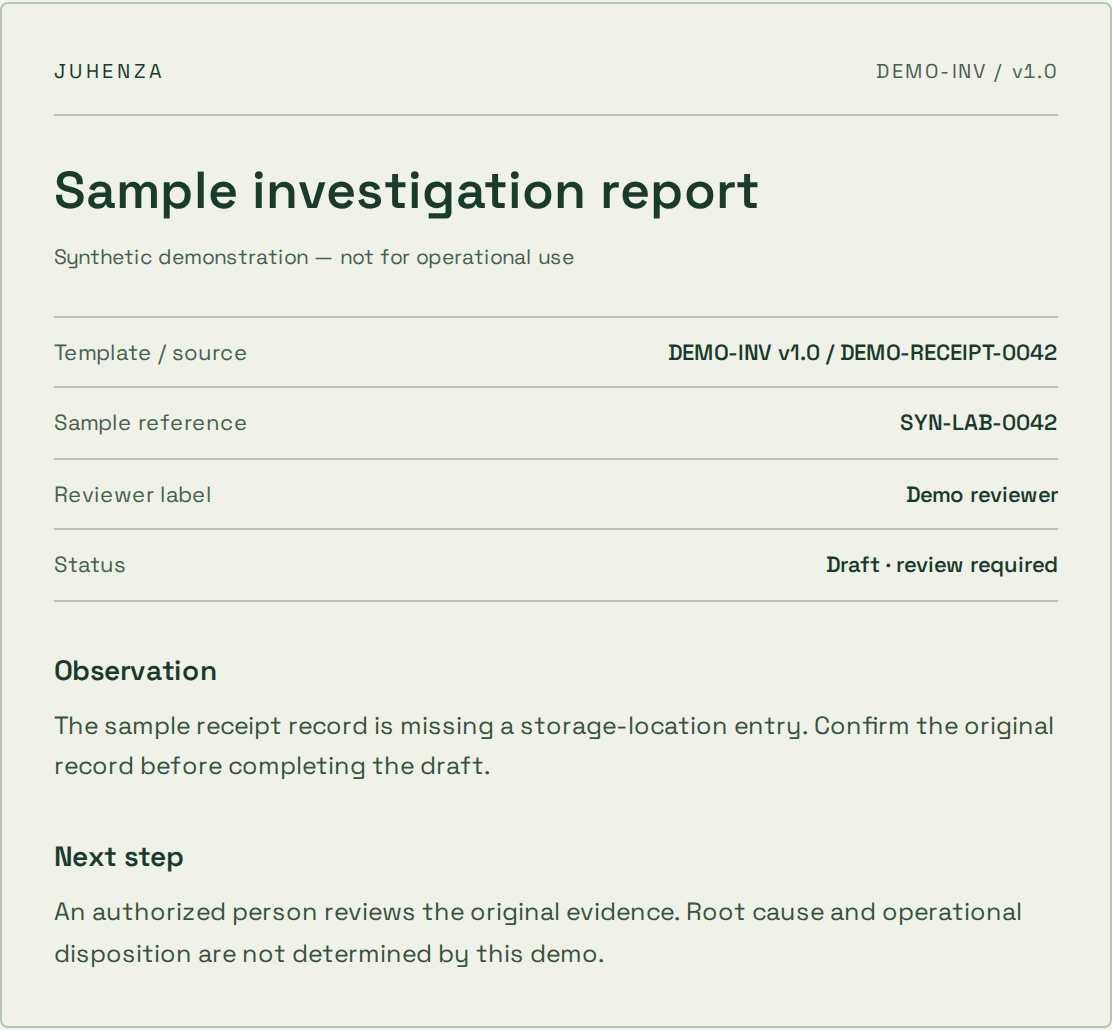
Edit an observation. Inspect the generated draft. Confirm your sample review before exporting a PDF.

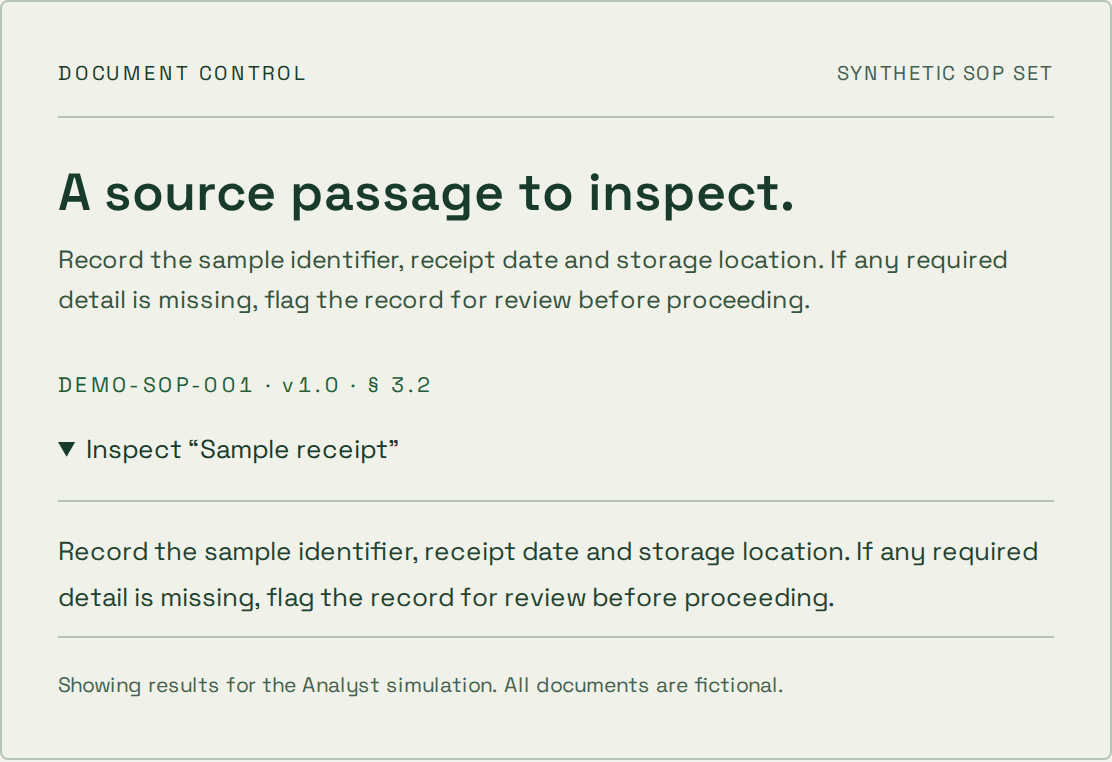
Explore a synthetic SOP library and inspect the source passage. Try a restricted role or an unsupported question.

The problem is clear, but the approach is not.
A bounded experiment, findings and a recommendation on what to validate next.
A prototype is not a production-ready service.
You know the workflow and can agree acceptance checks.
Agreed deliverables, verification evidence and operating instructions for the scoped release.
Changes to scope need an explicit decision on cost and timing.
A live system needs focused changes or ongoing care.
A prioritized backlog, reviewed changes and an agreed maintenance or support boundary.
Coverage, response targets and access are agreed per engagement.
Distinguish public content from account-specific workflows. Choose rendering and caching behavior with data freshness and access requirements in mind.
Connect interfaces to APIs and approved data services. Keep server-only configuration and credentials outside browser code.
Plan the runtime, updates, error reporting and release ownership. Review framework changes against the application’s regression checks.
Practical answers before the build. Bring the details of your project to the conversation.
It can fit a React application that needs coordinated routing, rendering and server capabilities. The choice should follow the product, deployment constraints and maintenance needs.
Yes. Review the current routing approach, framework version, data access, caching and deployment before defining changes.
No. It can make content available to crawlers, but indexing and visibility also depend on content quality, access, canonical signals and the search engine’s decisions.
Bring the problem you want solved. We’ll shape it into a project brief you can keep — or let AI draft a first approach.