
Keep shared decisions in one place
Common colors, spacing, typography and component behavior should be reusable rather than copied into each page.
Promote recurring patterns and retain useful local layout differences.
Tailwind CSS interface work for React applications, combining reusable design decisions with responsive composition and complete interaction states.
Plan your Tailwind CSS projectCommon colors, spacing, typography and component behavior should be reusable rather than copied into each page.
Responsive behavior needs to support long labels, missing records and intermediate widths as well as ideal screenshots.
Focus, disabled, loading and error states are part of the component contract.
Connect shared design values to reusable interface patterns.
Inspect contrast, consistency and component variations.
Reflow content according to available space and the user’s task.
Check wrapping, overflow and orientation changes.
Consolidate repeated classes and resolve conflicting rules around shared patterns.
Compare the rendered result and interaction behavior after cleanup.
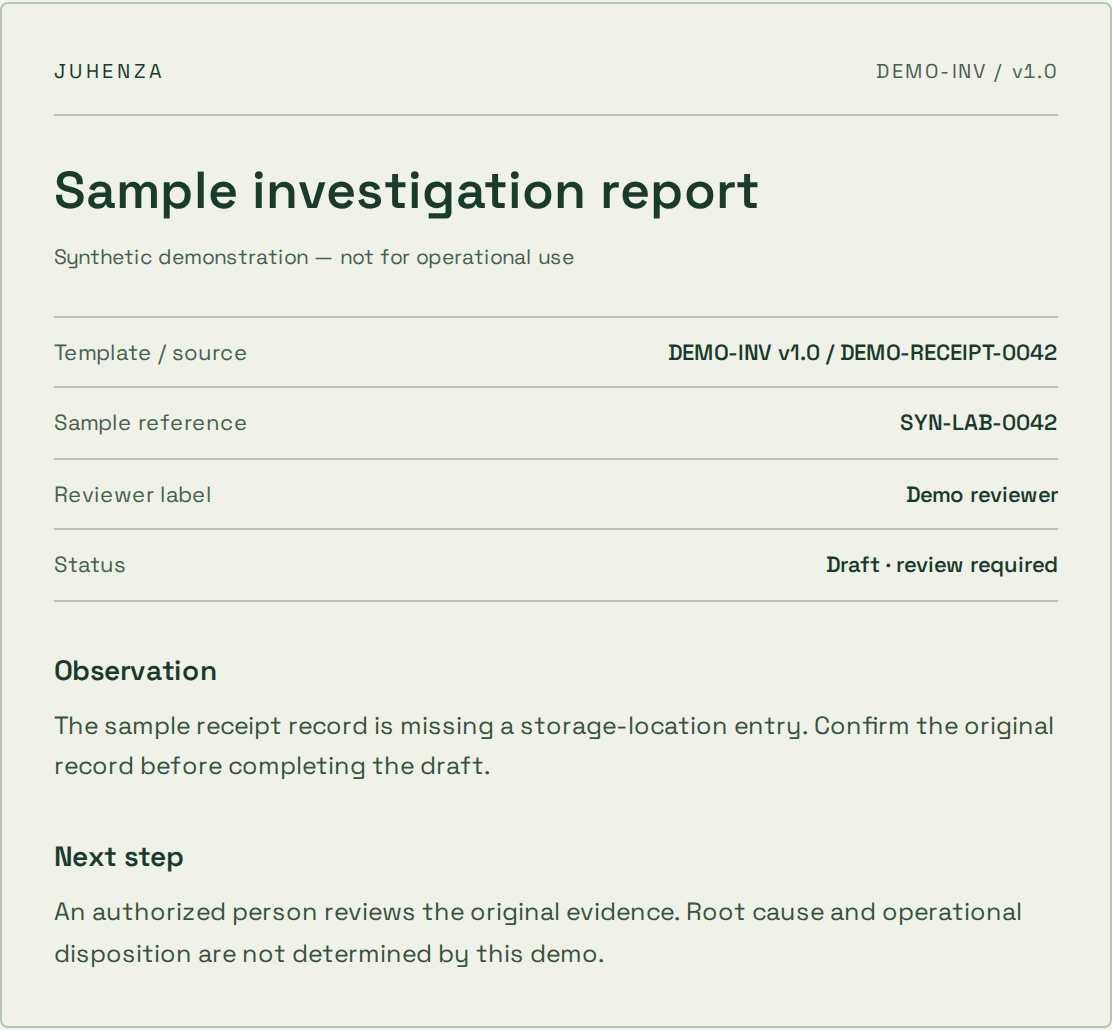
Edit an observation. Inspect the generated draft. Confirm your sample review before exporting a PDF.
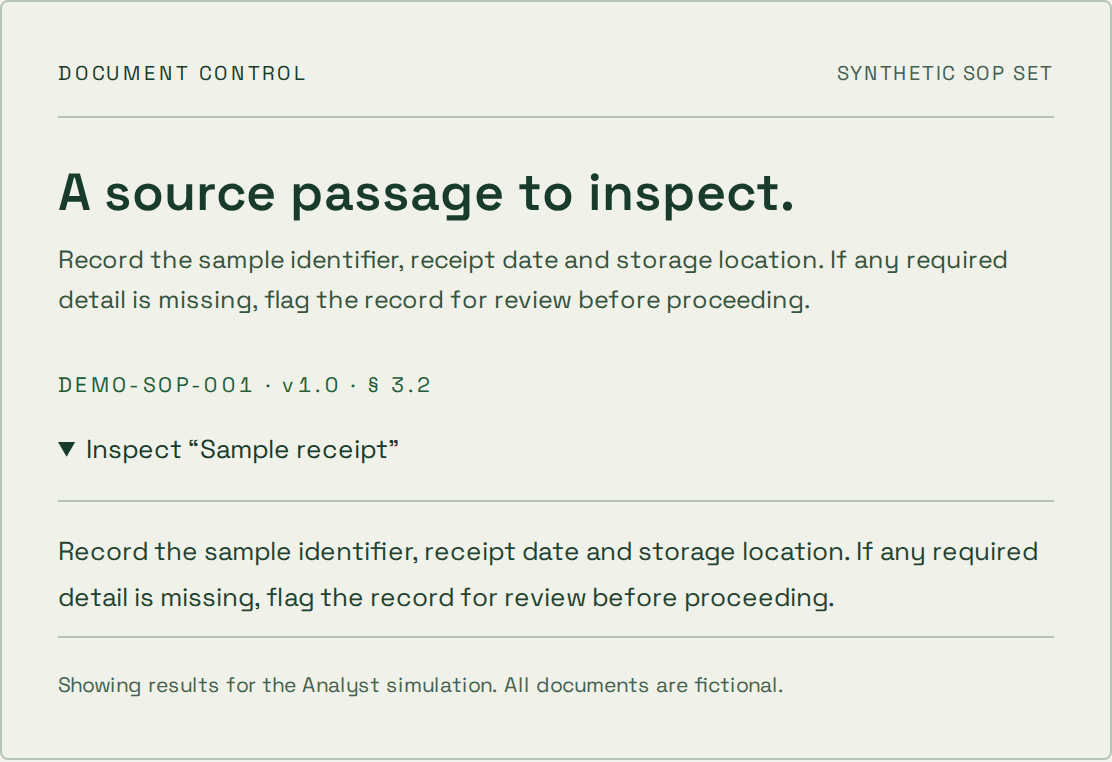
Explore a synthetic SOP library and inspect the source passage. Try a restricted role or an unsupported question.
The problem is clear, but the approach is not.
A bounded experiment, findings and a recommendation on what to validate next.
A prototype is not a production-ready service.
You know the workflow and can agree acceptance checks.
Agreed deliverables, verification evidence and operating instructions for the scoped release.
Changes to scope need an explicit decision on cost and timing.
A live system needs focused changes or ongoing care.
A prioritized backlog, reviewed changes and an agreed maintenance or support boundary.
Coverage, response targets and access are agreed per engagement.
Define layouts around actual content and task requirements. Test narrow screens, wrapping labels and intermediate widths instead of only one desktop size.
Keep common colors, typography and spacing in a shared system. Consolidate repeated patterns while allowing meaningful local layout differences.
Review focus, hover, disabled, error and loading states. Document the patterns needed to extend the interface without reproducing long class blocks.
Practical answers before the build. Bring the details of your project to the conversation.
No. It supplies styling utilities; the product still needs decisions about reusable components, tokens, hierarchy and behavior.
Yes. Review repeated patterns, conflicting breakpoints and missing component states, then consolidate at the appropriate level.
Use shared components or styles for patterns that recur, with utilities for local composition. Avoid creating an abstraction for every one-off exception.
Bring the problem you want solved. We’ll shape it into a project brief you can keep — or let AI draft a first approach.